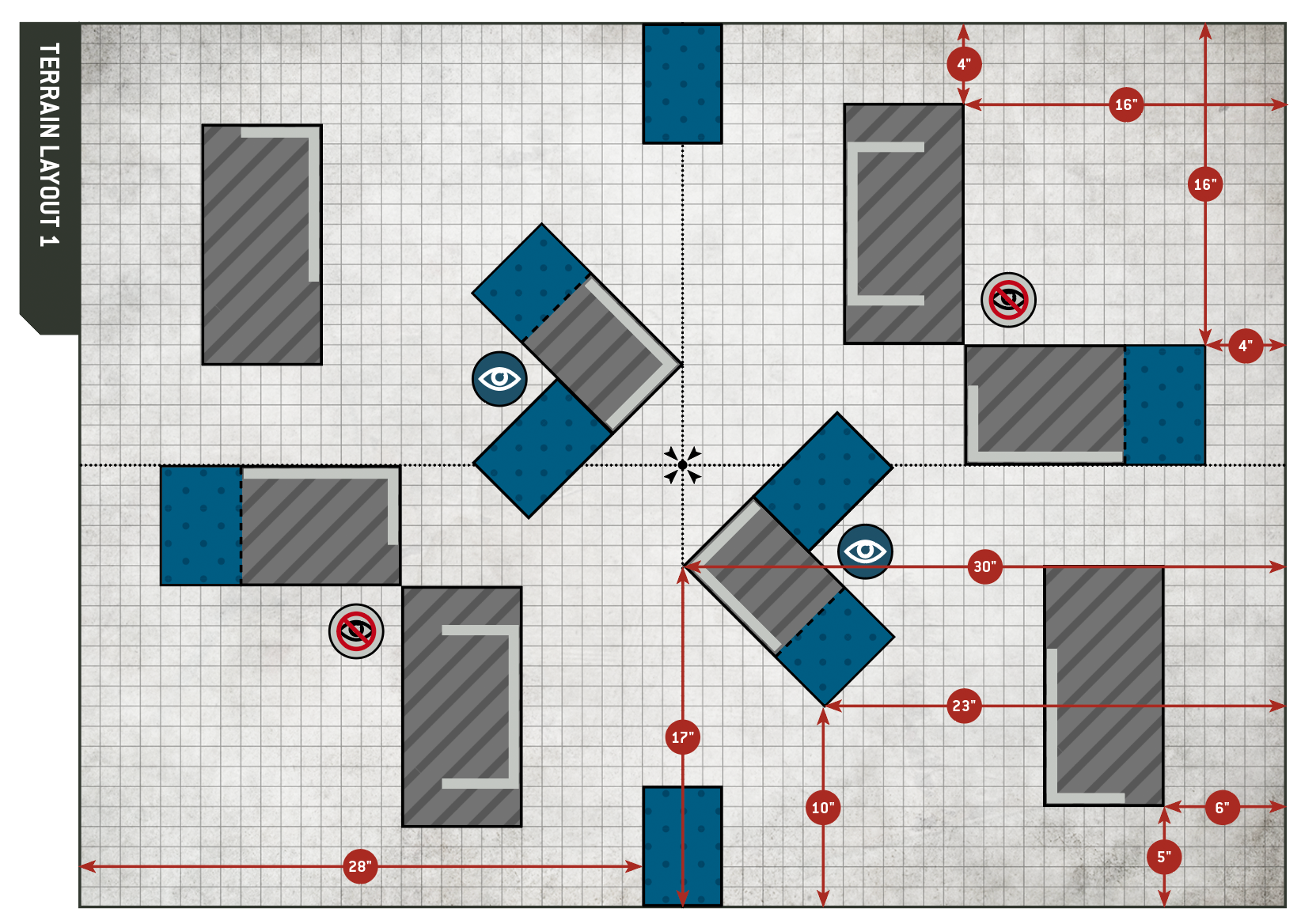
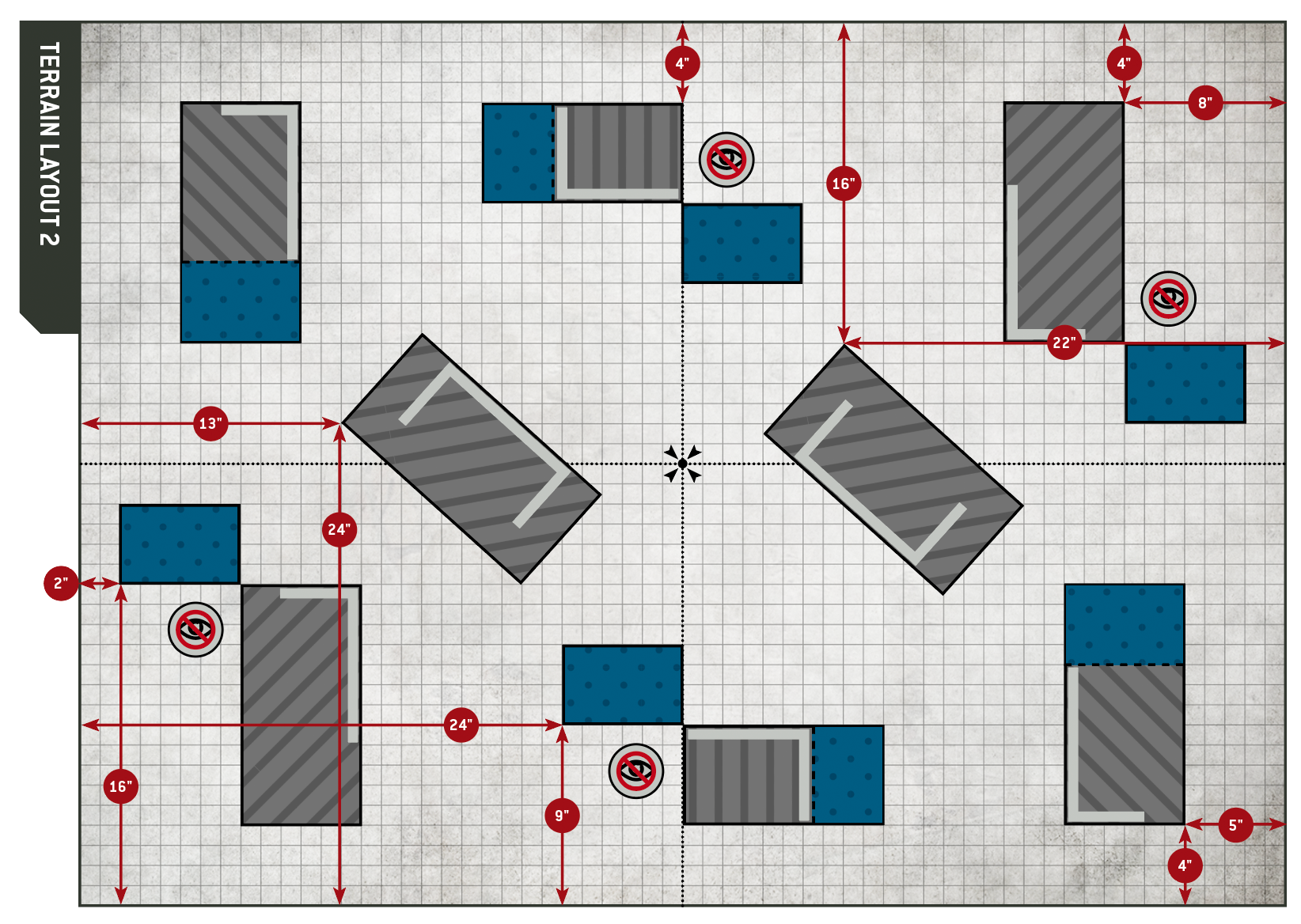
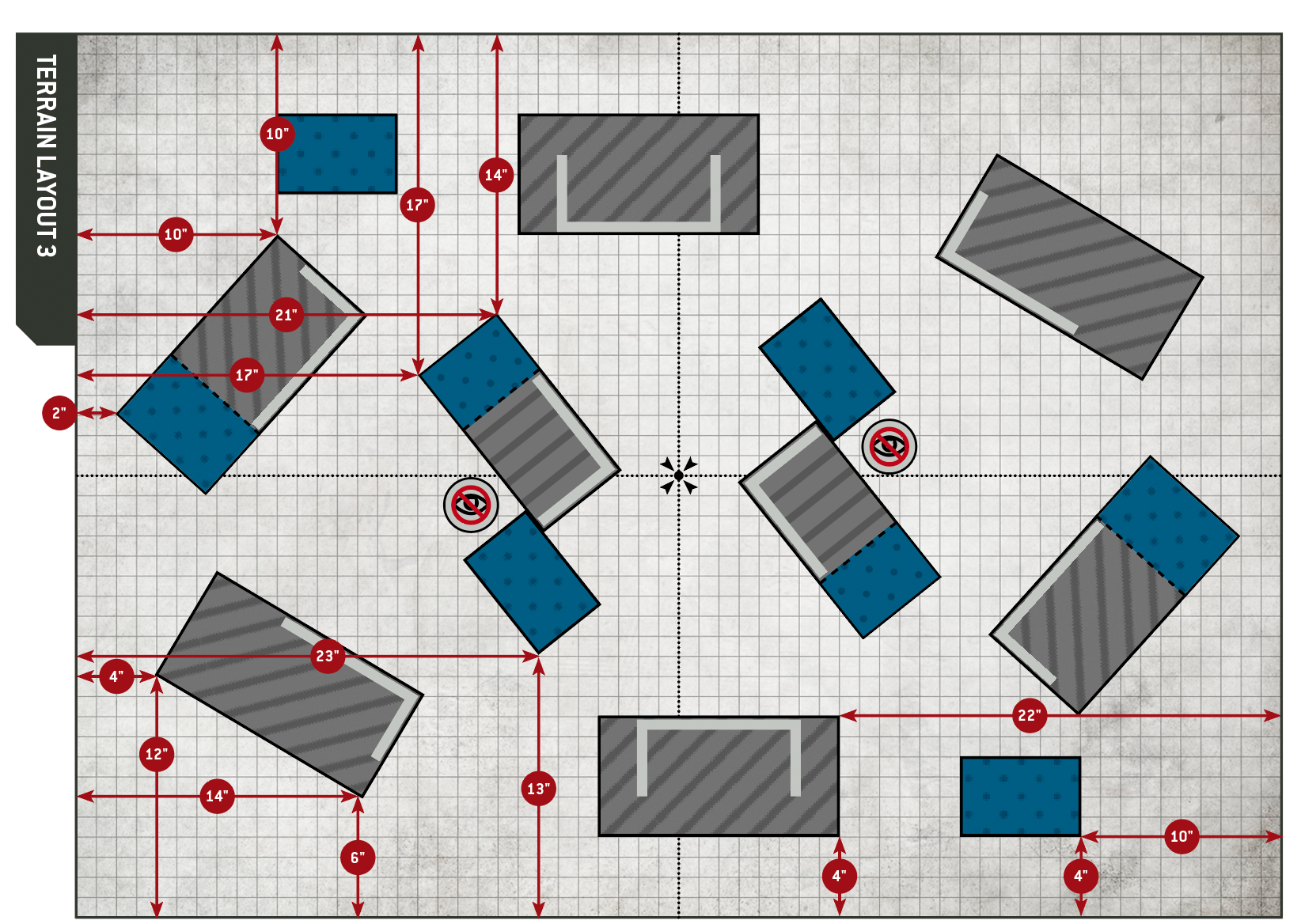
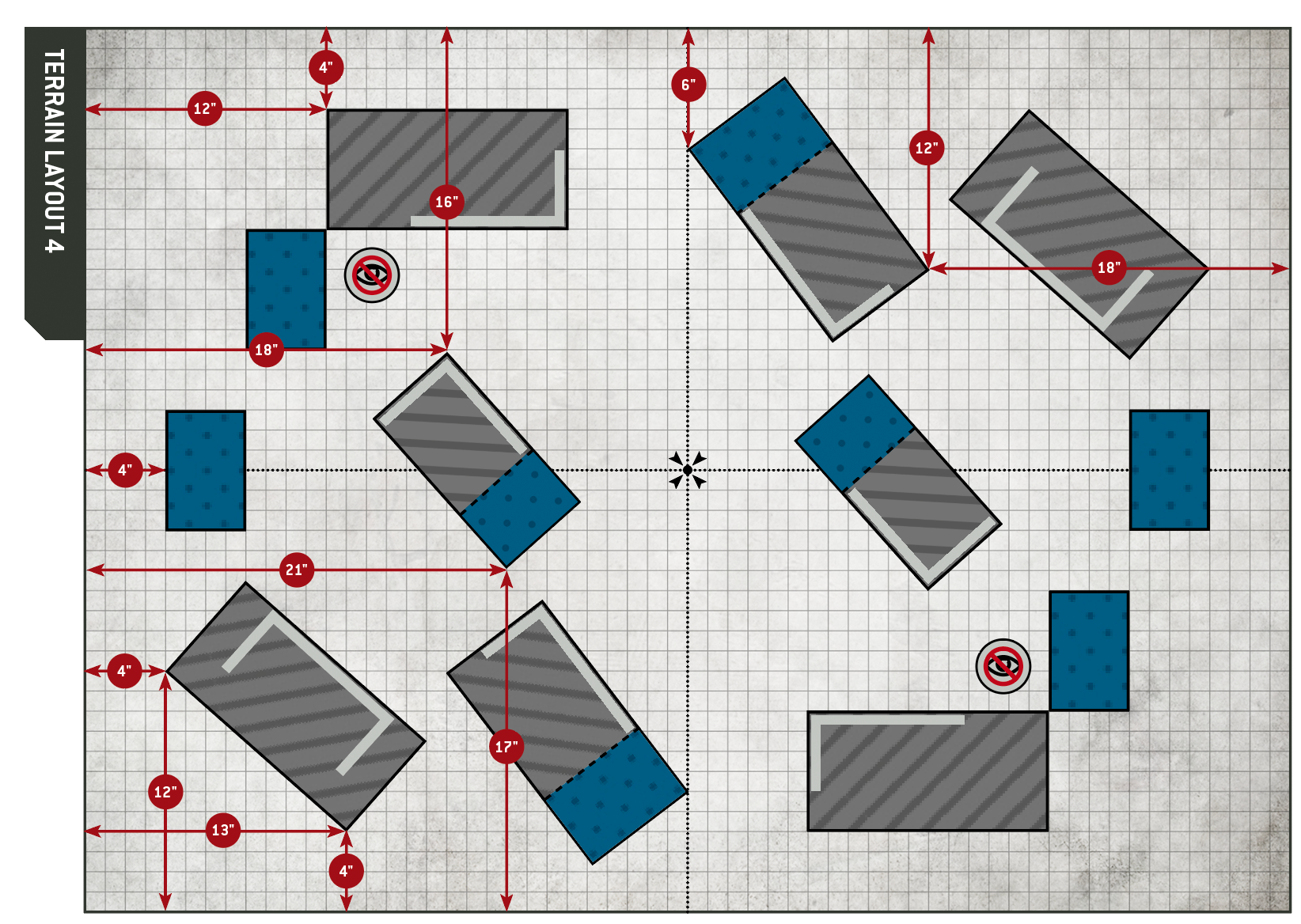
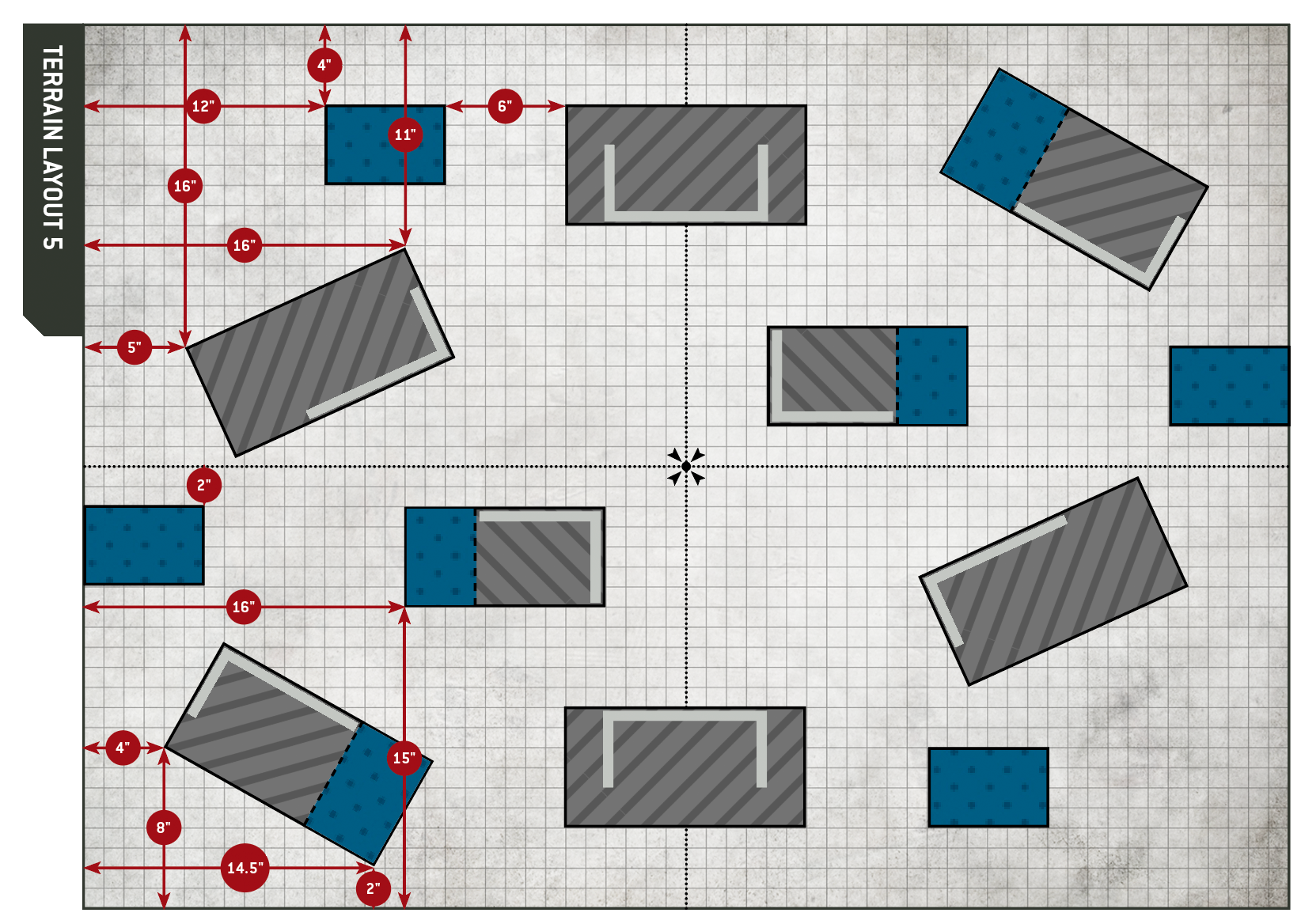
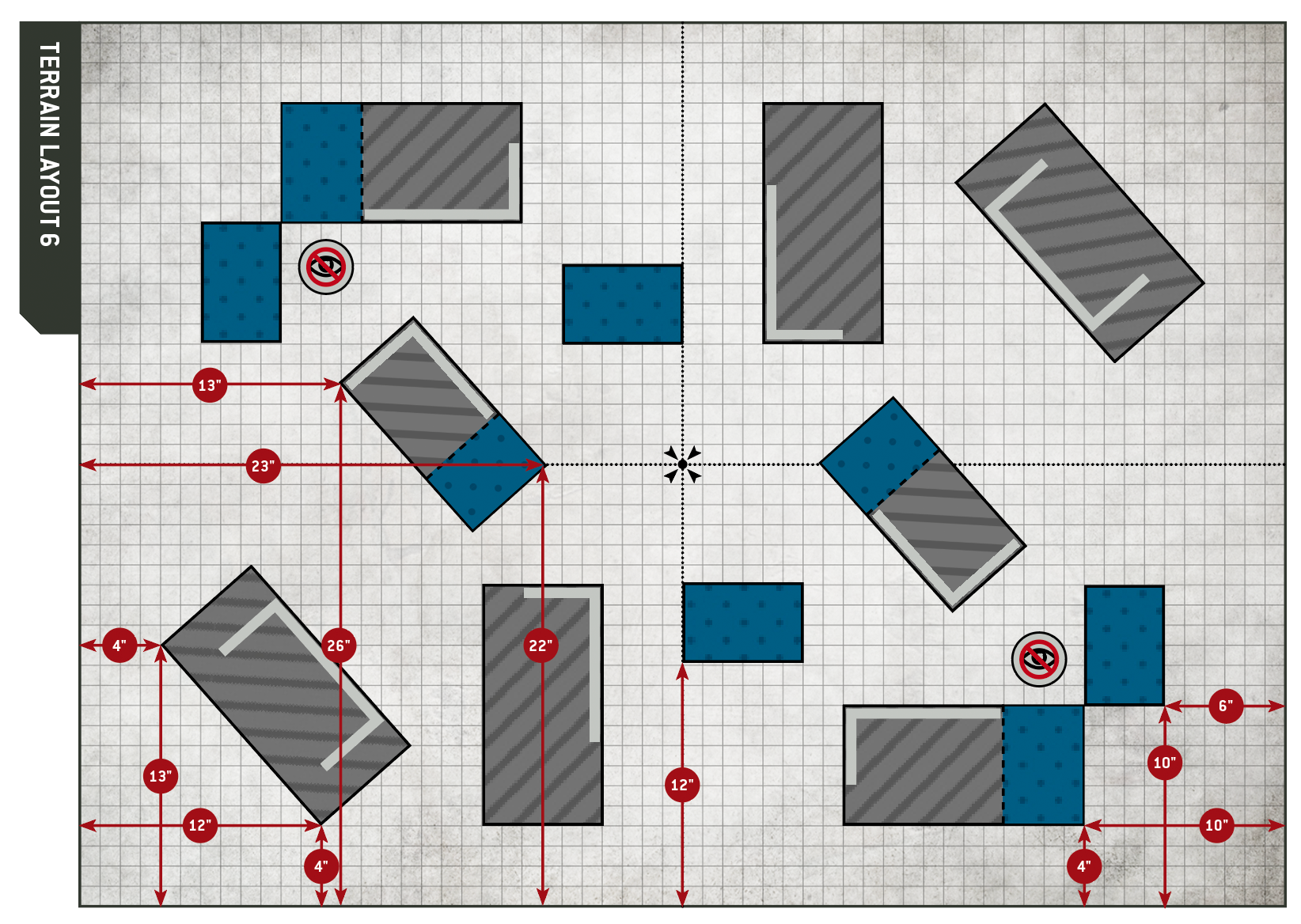
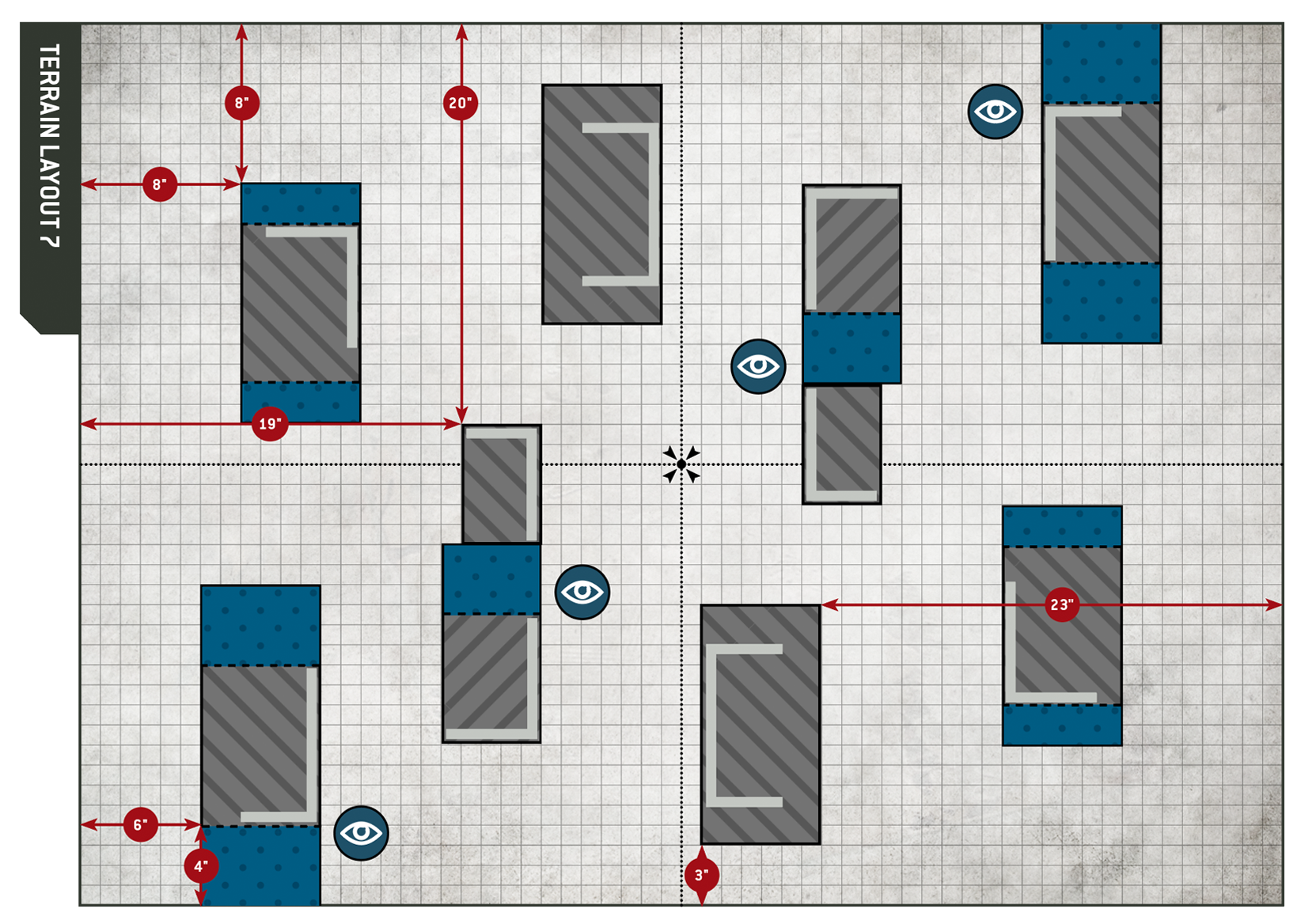
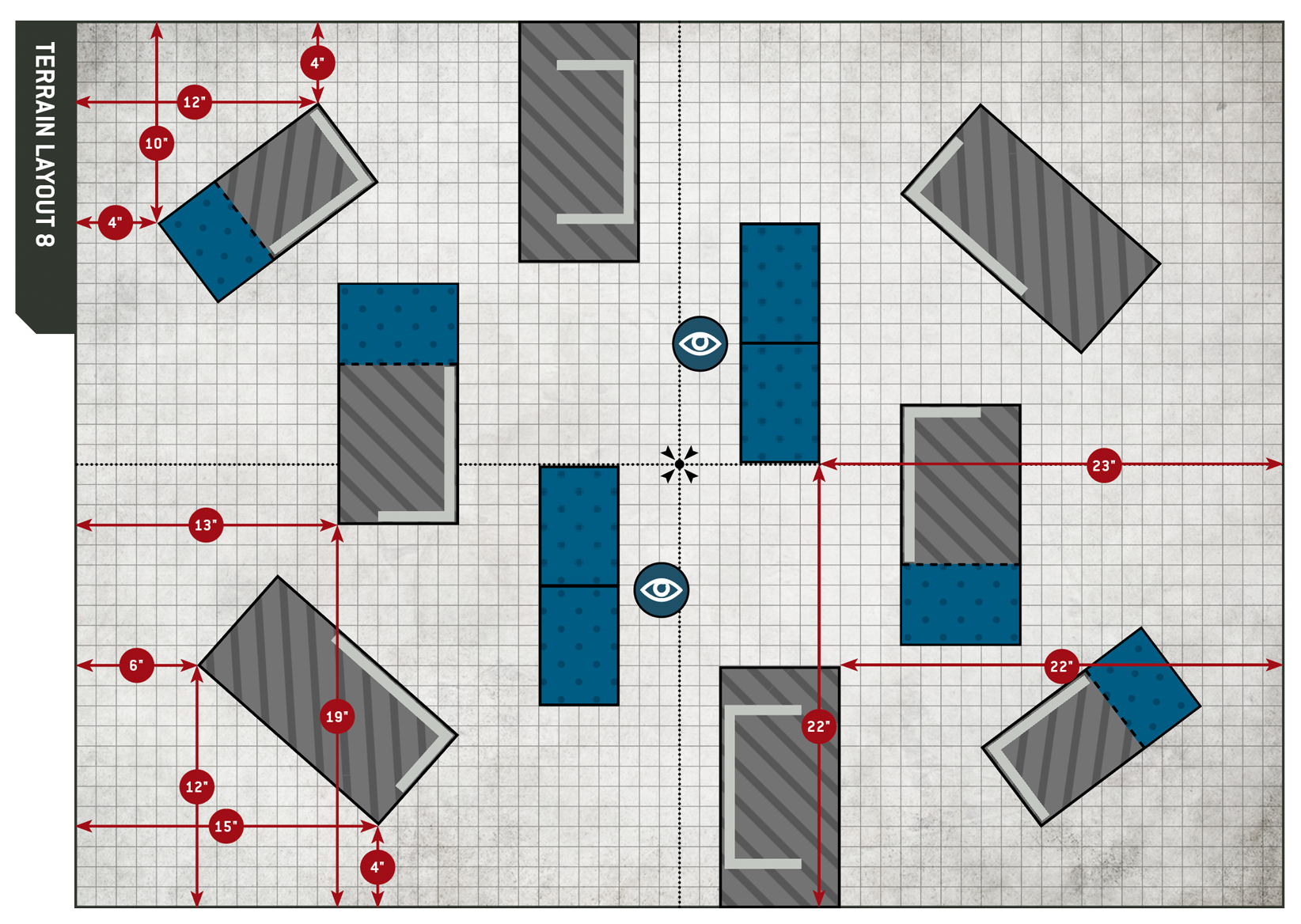
The following battlefield recommendations are intended primarily for newer organisers and those looking for a steer in building up a terrain collection for regular tournament play. These layouts will be seen at most Games Workshop matched play events, and reflect the type of terrain density that creates risk-and-reward decisions that a wide variety of army types can engage with. They are by no means the only way to set up a battlefield for balanced play, but represent a reliable starting point when in doubt.
These are the terrain layouts we use for balance and internal testing within the Warhammer Design Studio. We feel they reflect how a battlefield should look for balanced play in the current edition of Warhammer 40,000.
They are by no means the only way to set up a battlefield for balanced play, but represent a reliable starting point when in doubt. These layouts were designed with a few key principles in mind:
Recommended Measurements
For all of the battlefield recommendations we use a combination of three different sizes of area terrain outlines:
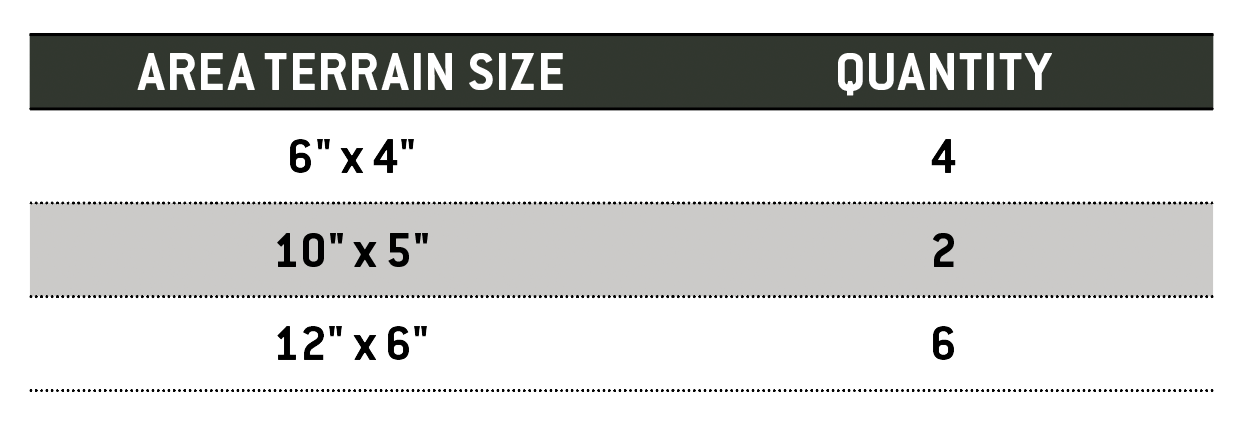
Using the area terrain outlines detailed above, all of the battlefield recommendations have preset measurements provided. This allows for organisers to easily set up the tables, or allow the players themselves to set up their own tables at the beginning of each round.
Objective Markers
Objective markers can and sometimes will be either hidden within terrain or placed in the open.
Use of Ruins
The following layouts primarily use the Ruins terrain feature. This efficiently achieves a good amount of line-of-sight blockage and cover appropriate for balanced games, thanks to the natural abstraction of line of sight within the rules for Ruins. Remember that a variety of terrain heights not only adds to the immersive nature of the battlefield, but is also important for line of sight and rules such as Plunging Fire. For organisers and players with a more robust terrain collection (especially elements that block true line of sight), incorporating features such as Woods, Barricades and Hills into your chosen layouts is perfectly acceptable.
Terrain Key - Suggested Terrain Height
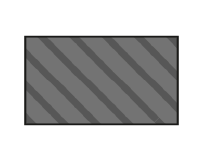
More than 4"
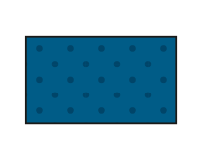
2"or less
For model mobility purposes, we have shaded the area terrain outlines in the above colours to show our recommendations for how tall the terrain should be in each section.
Below are examples of Ruins terrain placements within area terrain sections, as well as icons that denote if connected area terrain outlines are a single area terrain section or separate area terrain sections when determining line of sight.
These height and Ruin placement guidelines help provide a balanced tournament experience; as organisers you are free to adjust this to suit your terrain collection.
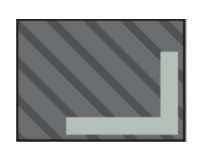
Recommended Ruins Terrain Placement